Sciatica is a common condition affecting millions of people in India and around the world. Many individuals now prefer Ayurvedic treatment for sciatica because it offers natural, gentle, and effective ways to relieve pain, improve mobility, and address the root cause rather than just the symptoms.
With modern lifestyles involving long hours of sitting, lack of exercise, and stress, cases of sciatica have risen significantly. People often search for sciatica pain treatment online when simple movements like standing up, walking, or bending cause discomfort.
What Is Sciatica?
Sciatica is a condition where the sciatic nerve—the largest nerve in the body—is irritated or compressed. This can cause pain that radiates from the lower back down through the hips, thighs, and legs. Sciatica is not a disease on its own; it is a symptom of an underlying problem in the spine or muscles.
Ayurvedic Perspective on Sciatica
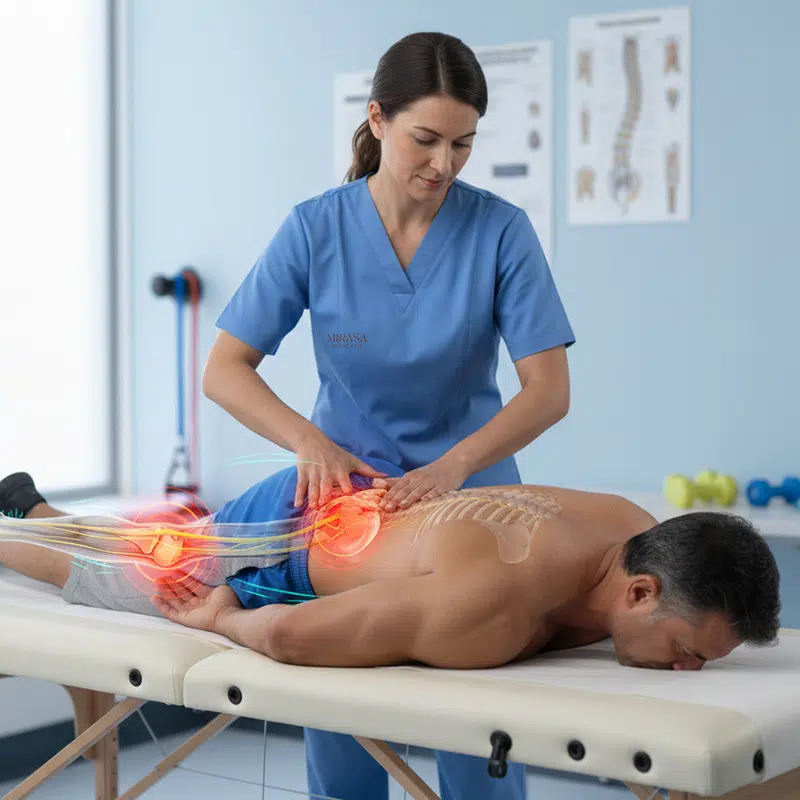
Sciatica usually causes pain that worsens when sitting for long periods. The sciatic nerve, which runs from the lower back down to the legs, becomes irritated or compressed. This pain often travels down one leg or sometimes both legs and may feel like tingling, burning, or a sharp, shooting ache.
From a modern medical perspective, sciatica is caused by compression, irritation, or inflammation of the sciatic nerve roots in the lower back. The pain starts in the lower spine and radiates down the leg, making movement uncomfortable and sometimes difficult.
In Ayurveda, sciatica closely corresponds to a condition known as Gridhrasi. This disorder involves the nerve pathways and muscular channels of the lower back and leg, producing symptoms similar to sciatica. The term Gridhrasi is derived from gridhra (vulture), describing how the pain spreads down the leg in a slow, dragging manner, similar to a vulture’s stride.
Ayurveda explains sciatica not as nerve pressure, but as an imbalance of body energies—primarily Vata dosha along with kapha dosha —along with blockage in the body’s channels (srotas). Vata governs movement and nerve function, and when aggravated by factors such as stress, cold exposure, irregular diet, or overexertion, it can lead to nerve stiffness, inflammation, and radiating pain.
Both Ayurveda and modern medicine agree that the pain begins in the lower back, travels down the leg, and restricts mobility.
Sciatica Pain Symptoms
Sciatica symptoms may vary depending on the nerve affected, but common signs include:
- Sharp, shooting pain in the lower back radiating up to buttocks or legs.
- Numbness or tingling in the leg or foot
- Weakness in the affected leg
- Difficulty standing up straight or walking
- Pain that worsens with prolonged sitting, coughing, or sneezing
If you notice these symptoms, early intervention can prevent the condition from worsening.
Sciatica Pain Causes
Several factors can lead to sciatica pain, including:
- Herniated or bulging discs in the spine
- Spinal stenosis (narrowing of the spinal canal)
- Muscle spasms in the lower back or hips
- Poor posture from long sitting hours
- Obesity that puts extra pressure on the lower back
- Age-related spinal degeneration
Understanding the cause of your sciatica is essential for choosing the best treatment for sciatica.
Ayurvedic Sciatica Pain Treatment
Ayurvedic therapies treat sciatica at its root rather than just masking pain. Common approaches include:
1. Panchakarma Therapies
- Abhyanga (oil massage): Warm herbal oils are massaged along the back and legs to relieve stiffness and improve circulation.
- Basti (medicated enema): Helps balance Vata from within and reduces nerve pain.
- Swedana (steam therapy): Relieves muscle tightness and improves flexibility.
- Kati Basti: Warm medicated oil is applied on the lower back to reduce inflammation and strengthen the spine.
2. Herbal Medicines
Ayurveda uses natural herbs such as Ashwagandha, Guggulu, Shallaki, Rasna, and Nirgundi to reduce inflammation, relieve pain, and strengthen nerves and muscles.
3. Lifestyle & Diet Changes
- Avoid prolonged sitting; practice light exercises and stretching
- Include warm, easy-to-digest foods, ghee, ginger, and turmeric in your diet
- Manage stress through meditation and yoga
Why Ayurvedic Treatment Is the Best Treatment for Sciatica
Ayurvedic treatment is becoming popular because:
- It treats the root cause, not just the symptoms
- Uses natural therapies without harmful side effects
- Improves nerve function, flexibility, and mobility
- Helps avoid surgery and long-term medication
- Provides long-term relief and strengthens the body
For many patients, a combination of Panchakarma therapies, herbal medicines, and lifestyle modifications is considered the best treatment for sciatica in India.
Conclusion
Ayurveda offers a holistic, natural, and long-lasting solution for sciatica. If you are looking for Ayurvedic treatment for sciatica or the best treatment for sciatica in India, combining Panchakarma therapies, herbal medicines, and lifestyle corrections is the most effective approach for pain-free, flexible living.