
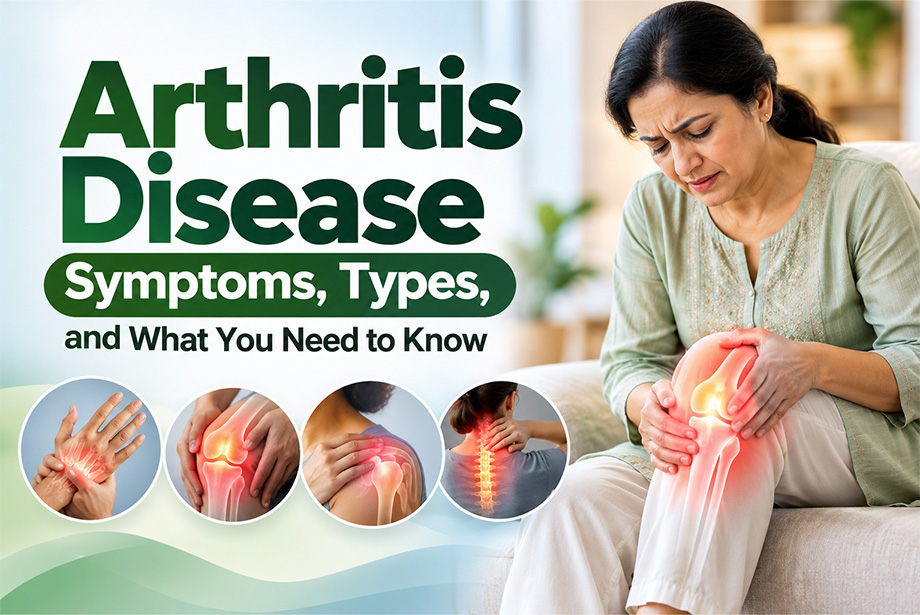
If you have ever asked yourself, “What is arthritis disease?” the short answer is that arthritis is not one disease. It’s an umbrella term for more than 100 conditions that cause inflammation, pain and stiffness in the joints. It can affect any age group, including children, but it is more common as we get older.
Mostly it means pain that makes it hard to move a joint the way you normally would. The joint can get puffy and sore to touch, and this can happen in just one spot or in several. The two big things people notice are aching and stiffness, and together they can make everyday stuff, including your job, a lot harder to get through.
Joints are where two bones join together, such as your knees, hips, fingers and shoulders. They are cushioned by cartilage and lubricated by a lining of fluid called the synovium. In the disease of arthritis this system is damaged by wear and tear, by the immune system attacking the joint or by other causes such as crystal buildup or infection.
Since the two terms are used almost interchangeably, people often ask, “What is arthritis and osteoarthritis?” They are alike, but not the same:
Arthritis is a broad term that covers several different joint conditions. Osteoarthritis is the most common type of arthritis. This occurs when the cartilage cushions the ends of your bones slowly deteriorates, leaving bones to grind against each other. The knees, hips, hands and spine are the most commonly affected. Simply put, osteoarthritis is a type of arthritis, but it’s the one people most associate with when they say “arthritis”.
Depending on the type of arthritis, various symptoms have been observed
Symptoms can develop slowly or appear suddenly, and they may flare up and then settle down for a while.
Understanding the types of arthritis helps explain why treatment differs from person to person. Here are the main ones:
Rheumatoid arthritis pain is different from the aching of osteoarthritis. Because it is driven by inflammation, it tends to have a distinct pattern:
Rheumatoid arthritis joint pain most commonly begins in the small joints of the hands and feet, including the knuckles and the base of the toes, before it spreads to larger joints like the wrists, elbows, knees, and ankles. Left untreated, ongoing inflammation can permanently damage the joints, which is why early diagnosis matters so much.
Feature | Osteoarthritis | Rheumatoid Arthritis |
Cause | Wear and tear of cartilage | Autoimmune inflammation |
Typical onset | Later in life, gradual | Any adult age can be faster. |
Morning stiffness | Usually under 30 minutes | Often longer than 30 minutes |
Pattern | Often one or a few joints | Usually symmetrical |
In Ayurveda, “arthritis” isn’t one condition. Joint disease is classified by its pattern, and diagnosis is a clinical process of examining both the patient and the disease. Classical texts rely on history-taking and the physician’s senses, not lab tests.
The usual Ayurvedic equivalents are:
Diagnosis is a key step in choosing the right treatment and understanding the cause of joint pain. At Mirasa Ayurveda, doctors assess your symptoms, joint condition and overall health before suggesting suitable Ayurvedic care. This helps guide a treatment plan based on your individual needs.
1. Nidana Panchaka (five-part disease assessment). This is the core framework for diagnosing a disease. It covers:
In Amavata, causes such as a spicy, non-vegetarian diet and habitual daytime sleep after meals are considered nidana. Samprapti is then described as weak digestive fire (mandagni) producing ama (undigested metabolic residue), which combines with aggravated Vata and settles in the joints.
2. Rogi Pariksha (examination of the patient). This uses three tools: Darshana (observation), Sparshana (touch) and Prashna (questioning). The physician checks:
3. Ashtasthana Pariksha (eight-fold examination). This covers pulse (nadi), urine, stool, tongue, speech, touch, eyes and general appearance, and is used for both diagnosis and prognosis. For example, a coated tongue and sluggish digestion suggest Ama in Amavata, while dry, cracking joints suggest Vata predominance.
4. Dashavidha Pariksha (ten-fold assessment). This evaluates the patient’s constitution (prakriti), strength, digestion capacity, age and tolerance to determine which dosha is dominant and how strong the patient is. It guides treatment more than it identifies the disease.
Ayurvedic treatment of arthritis focuses on understanding the person’s symptoms, health condition and lifestyle. Ayurvedic consultation may help guide supportive care through suitable therapies, diet and daily routine. Early diagnosis and appropriate medical treatment are important to help manage inflammation and prevent joint damage.
Don’t ignore joint symptoms. Book an appointment if you notice: Joint pain or swelling that lasts more than a few days Morning stiffness that lasts longer than 30 minutes Several joints affected at once Redness, warmth, or fever along with joint pain Difficulty carrying out everyday tasks Early treatment, especially for inflammatory types like rheumatoid arthritis, can slow progression and help protect your joints.
Arthritis disease is common, but it is also manageable. Knowing the symptoms, the different types of arthritis, and how conditions like osteoarthritis and rheumatoid arthritis differ puts you in a better position to seek help early and make informed decisions about your care.