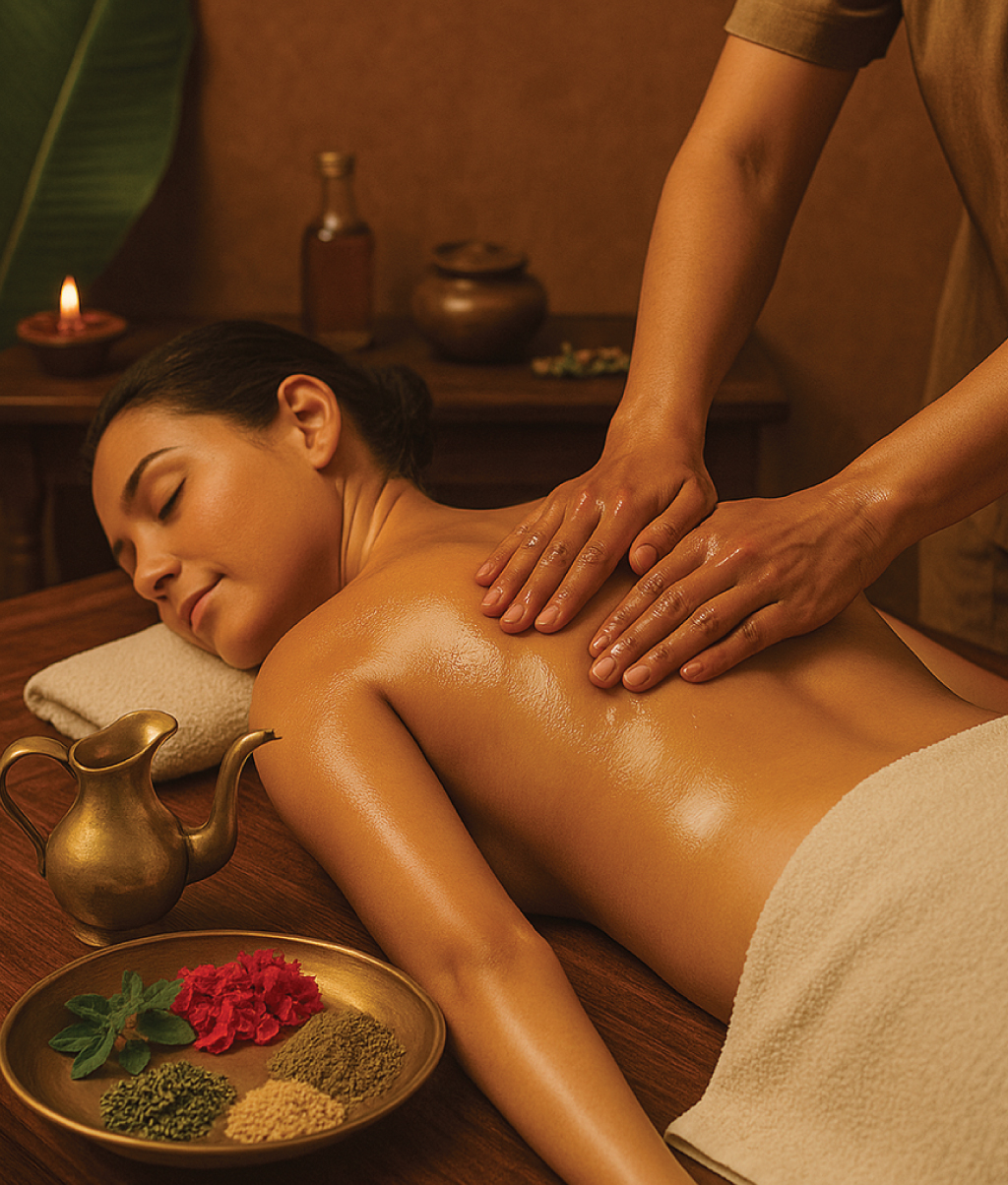
In Ayurveda, Abhyangam is the application of warm, therapeutic oil to the entire body. The word ‘abhyanga’ is a Sanskrit term, where ‘abhi’ means ‘towards’ and ‘anga’ means ‘limbs.’ When combined together, they mean massaging the body with oil.
Abhyangam is an essential part of Ayurvedic practice that balances both of the two doshas, and it is recommended for maintaining a healthy life or as a pre-treatment to receive classical Panchakarma treatments. Dosha-specific herbal oils are applied from head to toe using special Ayurvedic techniques to balance and realign the energy in the body. The therapy is believed to be beneficial not only by stimulating our bodily systems but also by creating harmony between mind and body.
Ayurvedic perspective on Abhyangam
Abhyangam is an important Ayurvedic practice that simply means applying warm oil to the body. It is part of Dinacharya, or the daily routine recommended in Ayurveda to stay healthy and prevent illnesses. Ayurveda believes that people who want good health, strength, and a happy life should do Abhyanga regularly—preferably every day. If a full body oil massage is not possible, at least applying oil to the head, ears, and feet is advised, as this helps keep the body relaxed, nourished, and balanced.
In Ayurveda, this oil massage is also called Abyanjana or Snehana. From an Ayurvedic point of view, Abhyanga helps balance Vata, which often gets disturbed because of modern stress, too much travel, lack of proper rest, and irregular daily routines. Ancient Ayurvedic texts explain this with a simple example—just like a cart runs smoothly when its axle is well oiled, or a tree stays strong when its roots are watered regularly, the body also remains strong, stable, and full of energy when oil massage is done regularly.
An Ayurvedic Shloka on Abhyangam
Sparśhane’bhyadhiko vāyuḥ, sparśanaṁ ca tvāgāśritam |
Tvacyāś ca param abhyangaḥ, tasmāt taṁ śīlayen naraḥ ||
Meaning : When Vata becomes aggravated, the experience of sparsha (tactile sensation) depends upon the condition of the skin. Oil is Vata-pacifying in nature; therefore, massaging the body with oil is extremely beneficial for the skin. Hence, daily oil massage (Abhyanga) is recommended. (Verse 87)
In modern understanding, Vata is often compared to the nervous system. The skin houses numerous sensory nerve endings, and based on these, the sense of touch (tactile sensation) functions. Therefore, oil massage (Abhyanga) provides rapid relief in disorders of the sense of touch and Vata-related diseases.
न चाभिघाताभिहतं गात्रमभ्यङ्गसेविनः । विकारं भजतेऽत्यर्थ बलकमणि वा क्वचित॥।८८।।
सुस्पर्शोपचिताङ्गश्च बलवान् प्रियदर्शनः। भवत्यभ्यङ्ग नित्यत्वान्नरोऽल्पजर एव च
Na chābhighātābhihataṁ gātram abhyanga-sevinaḥ |
Vikāraṁ bhajate’tyarthaṁ balakṣamaṇi vā kvacit || 88 ||
Susparśopacitāṅgaś ca balavān priyadarśanaḥ |
Bhavaty abhyanga-nityatvān naro’lpa-jara eva ca ||”
Meaning :
Benefits of Oil Massage (Taila Abhyangam): A person who performs daily oil massage of the body does not easily develop disorders of the skin, even when subjected to injury (trauma) or while performing forceful physical activities such as carrying heavy loads, pulling carts, or engaging in strenuous exercise.
Regular oil massage makes the skin soft and pleasant to touch, keeps the skin of all body parts well-nourished and well-filled, and enhances physical strength. The person appears healthy, attractive, and pleasing in appearance. Moreover, even in advancing age, the signs of old age do not manifest fully and appear only to a minimal extent.
स्नेहाभ्यङ्गाद्यथा कुम्भश्चर्म स्नेहविमर्दनात्। भवत्युपाङ्गादत्तश्र दृढं क्लेशसहो यथा ॥८ तथा शरीरमभ्यङ्गाद्दृढं सुत्वक् च जायते। प्रशान्तमारुताबाघं क्लेशव्यायामसंसहम्
Snehābhyangād yathā kumbhaś carma snehavimardanāt | Bhavaty upāṅgād attaś ca dṛḍhaṁ kleśa-saho yathā || 8 || Tathā śarīram abhyangād dṛḍhaṁ su-tvak ca jāyate | Praśānta-mārutābādhaṁ kleśa-vyāyāma-saṁsaham ||
Meaning: Praise of Oil Massage (Taila Mardana):Just as a clay pot becomes strong and durable when coated with oil or ghee, and just as the axle of a cart wheel becomes firm and capable of withstanding strain when lubricated with oil and leather padding, in the same way, oil massage of the body makes the skin strong and beautiful. It prevents the occurrence of Vata-originated disorders and endows the body with the capacity to endure exertion, fatigue, and physical stress
Scientific Mechanism & Clinical Evidence
Classical Ayurveda explains abhyanga as balancing doshas and nourishing tissues; modern research is beginning to explore how it might work scientifically. Research suggests that the warmth and gentle touch of body rubbing relaxes deeply. This relaxation may calm the body’s nerves, transform it into a resting state, and reduce stress levels, thereby improving sleep and helping the body and mind feel better overall.
Clinical studies have also indicated abhyanga therapy can improve blood flow and lymphatic movement, thereby helping muscles relax and supporting the body’s natural recovery process. While scientists are still studying exactly how this works inside the body, current findings show clear benefits for relaxation, stress relief, and better daily functioning.
Abhyangam Procedure
The process begins by gently applying warm herbal oil to the scalp, then spreading it evenly across the entire area. After this, the oil is applied to the ears, palms, and feet, then to the rest of the body. The oil should be rubbed in the same direction as the body hair, towards the heart, for most people. However, if someone has an imbalance related to Kapha, the oil should be rubbed in the opposite direction of the hair. In the case of Pitta issues, the strokes should be alternated—sometimes in the direction of the hair, sometimes against it.
Indication for Abhyangam
Abhyangam is recommended for various health conditions, including:
- Joint and Spine Disorders
- Neurological disorders like Parkinsonism
- Skin issues like Eczema
- People with stress, insomnia, mental health issues, or chronic fatigue
- Liver issues: Indigestion, IBS
- Women’s health: Menstrual cramps, postpartum care
- CVS/Respiratory: Bronchial asthma
- Protection: Good for your skin & hair & for eyesight improvement
Benefits of Abhyangam
The advantages of Abhyangam, when done holistically, are both physical and mental:
- Helps to reduce tiredness and fatigue
- Lubricates joints and increases flexibility
- Increases blood flow and skin brilliance.
- Lowers the tone of the muscle and relieves muscle spasm
- Strengthens the metabolism and digestive fire (Agni)
- Better sleep and less insomnia
- Tones the nervous & immune system
- Prevents hair fall and aids in vision care
- Aids in detoxification and promotes longevity
- Provides anti-aging properties and emotional harmony