
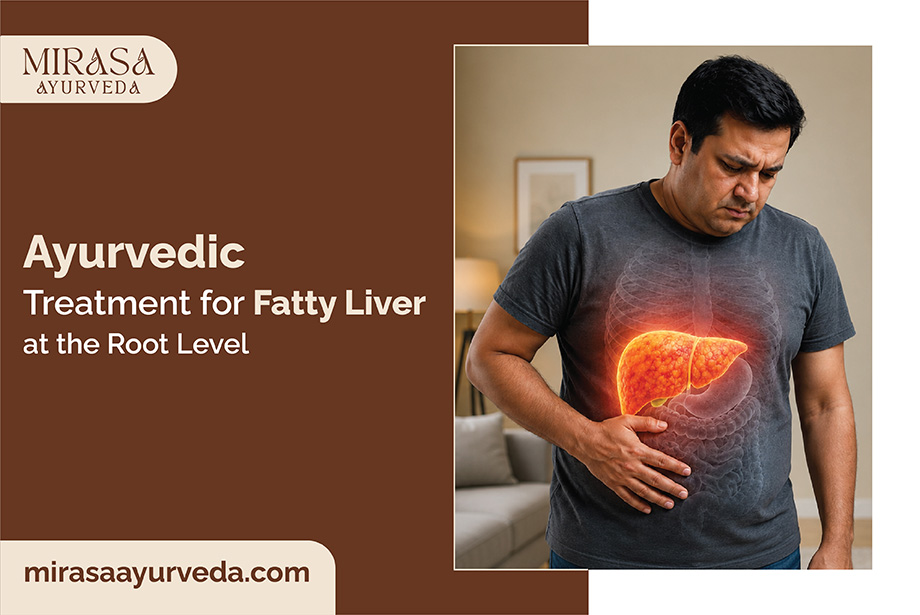
Best Ayurvedic treatment for fatty liver works on the root cause and does not just treat the scan report. Fatty liver is generally considered under the umbrella of Yakrit Roga (liver disorders) and Medoroga (disorders of fat metabolism) in Ayurveda. Poor digestion, excess Kapha and Ama accumulation are some of the causes for fat deposition in the liver. Fatty liver is also reported as a modern clinical case report as a condition associated with obesity and metabolic imbalance and improved after an Ayurveda-based intervention.
Fatty liver is becoming more common due to sedentary habits, overeating, irregular meal time and metabolic stress. Ayurveda describes this pattern as Agnimandya, or weak digestive fire, resulting in incomplete digestion and the formation of Ama, a toxic metabolic residue which blocks channels and disturbs tissue metabolism. This is why Ayurvedic management is not started with one herb but with restoring digestive strength, reducing overload and supporting proper elimination.
From the classical standpoint, liver congestion and fat accumulation reflect a broader disturbance in Kapha and Meda dhatu. When diet is heavy, oily, sweet, and excessive and physical activity is low, the body tends towards Santarpana—overnourishment—which aggravates Kapha and promotes accumulation. The modern review on obesity and NAFLD (non-alcoholic fatty liver disease) in Ayurvedic medicine notes that classical texts link obesity-related disorders with dietary excess, inactivity, and impaired metabolism.
Ayurveda’s approach is therefore not merely “liver tonics” but a full correction of Agni, Ama, and Meda. In practical terms, this means lightening the diet, improving bowel regularity, reducing fatty and processed foods, and using herbs and formulations that are
These principles are consistent with the intervention patterns described in the clinical case report.
Classical Ayurveda places strong emphasis on treatment according to the dominant dosha and tissue imbalance. For fatty liver, the key principles are the following:
To avoid recurrence A case report in the Journal of Ayurveda and Integrative Medicine used formulations like Avipattikara Churna, Punarnava Mandura, Triphala Churna, Kutaki Churna and Sankha Bhasma in treatment phases along with clinical improvement in symptoms, weight and liver parameters. One case doesn’t prove universal efficacy, but it does demonstrate how classical Ayurvedic logic works in practice.
Several herbs frequently used in Ayurvedic management of fatty liver are traditionally valued for liver support and metabolic regulation.
Ayurveda gives equal importance to pathya—the correct way of eating and living. A useful diet pattern includes light, freshly cooked food, bitter vegetables, legumes, seasonal greens, and appropriate spices that kindle digestion without overburdening the liver. Heavy fried food, frequent sugar intake, refined flour, alcohol, overeating, and late-night meals worsen Kapha and Ama, so they are typically restricted.
Daily walking, yoga, pranayama, regular sleep, stress reduction, and avoiding daytime sleep are all aligned with classical obesity-management principles discussed for Fatty Liver Treatment in Ayurveda. The review literature notes that exercise and behavioural correction are central to reducing obesity and related fatty liver risk. In other words, medicine works best when it is paired with a disciplined routine.
Modern evidence does not replace classical Ayurveda, but it helps frame why traditional interventions may be useful. The case report showed improvement in BMI, lipid profile, liver enzymes, and ultrasound findings after Ayurveda treatment in a patient with grade II fatty liver. Review literature also suggests that herbs and lifestyle measures used in Ayurveda may help improve body composition and metabolic health.
Therefore, it is important to take specific care for fatty liver as it can progress if ignored, and anyone with elevated liver enzymes, diabetes, obesity, or alcohol use should be medically evaluated. Ayurvedic treatment may support recovery, but it should be individualized and monitored, especially when liver tests are abnormal.