
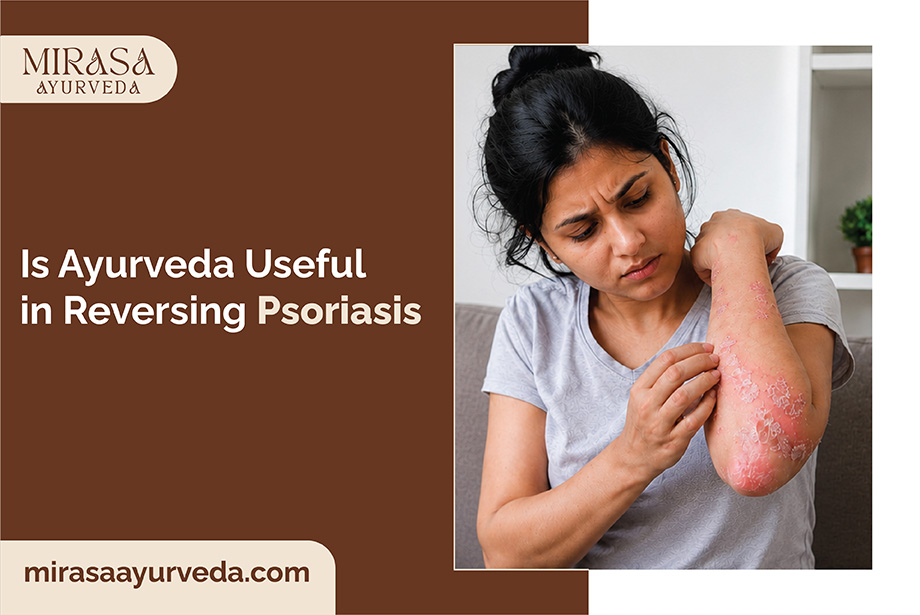
Psoriasis is one of those conditions that tries patience. The itching, the flaking, the visible patches on skin and the emotional toll of managing a chronic condition can leave people looking for alternatives to steroid creams and immune-suppressing medications. That’s precisely why so many folks look to Ayurveda, India’s ancient system of medicine, for a gentler, more sustainable path to relief.
Ayurvedic treatment of psoriasis focuses on correcting the root imbalance in the body rather than simply suppressing symptoms on the skin’s surface. Unlike quick-fix creams, this approach works gradually, combining herbs, diet, and detox therapies to restore balance from within. Many patients turn to ayurvedic treatment of psoriasis precisely because it offers a holistic, low-side-effect alternative to long-term steroid use.
So, is there any way that Ayurveda can manage or reverse psoriasis without steroids? What Ayurveda has to say about this skin condition, how it treats it and what realistic expectations look like.
Psoriasis is frequently associated in Ayurveda with a condition known as “Kitibha Kushtha,” which is part of a larger group of skin conditions called Kushtha Roga. Ayurvedic theory states that vitiated blood tissue (Rakta dhatu) and the aggravation of two doshas, specifically Vata and Kapha, are the causes of psoriasis. The rapid accumulation of skin cells that characterizes psoriasis plaques is thought to result from this imbalance, which interferes with the normal cycle of skin cell regeneration. Ayurveda also emphasizes the importance of the digestive fire, or “Agni”. Toxins (Ama) are thought to build up in the body when digestion is poor or erratic. These toxins enter the bloodstream and settle in tissues, including the skin, and exacerbate inflammation and psoriasis symptoms. Because of this, Ayurvedic treatment rarely concentrates solely on the skin; instead, it treats the ailment as a reflection of underlying systemic imbalances.
The Ayurvedic Method of Therapy Ayurveda usually employs multiple approaches rather than a single treatment:
Panchakarma detoxification: Traditional methods for removing accumulated toxins from the body include Virechana (therapeutic purgation) and Raktamokshana (bloodletting, performed under close clinical supervision).
Herbal formulations: Because of their anti-inflammatory and blood-purifying qualities, herbs like neem, turmeric, manjistha, guduchi, and khadira are frequently used. These are frequently made as topical or internal formulations.
Dietary adjustments: Ayurveda advises staying away from foods like curd, sour foods, fermented foods, and excessive amounts of salt or sugar that aggravate the Vata and Kapha doshas. Warm, easily digested meals are preferred instead.
Lifestyle and stress management: Ayurveda uses techniques like yoga, pranayama (breathing exercises), and meditation to help regulate the nervous system because stress is a known cause of psoriasis flare-ups.
External applications: To relieve irritation and lessen scaling, affected areas may be treated with medicated oils and pastes made from neem, turmeric, and other herbs.
Honesty is what counts here. Some smaller studies and case reports have suggested benefit from specific herbs and Panchakarma protocols, but psoriasis is a complex autoimmune condition. Neither Ayurvedic nor conventional has been shown to “cure” it permanently for everyone.
The term “reverse” should be approached carefully. Some individuals do experience significant reduction in plaques, redness, and flare frequency with a combined Ayurvedic lifestyle and herbal approach. Others find it works best alongside, rather than instead of, conventional dermatological care. Psoriasis is also highly individual — what works well for one person’s triggers and body constitution may not work the same way for another.
This is the most important point: do not ever stop your prescribed steroid or immunosuppressive treatment suddenly yourself. Stopping topical or systemic steroids suddenly may cause a rebound flare that is often worse than the original problem. For those actively searching for psoriasis treatment without steroids ayurveda offers a structured, time-tested path, but it is meant to be a gradual transition, not an overnight switch. For this reason, anyone thinking about using Ayurveda to treat psoriasis without steroids should always do so under combined supervision rather than alone. This is the safest course of action if you wish to try Ayurveda:
If you want to try Ayurveda, the safest thing to do is this:
An integrative approach works for many people, using Ayurveda to support gut health, reduce stress, and manage diet while working with a dermatologist to manage flare-ups and monitor the condition’s severity.
Ayurveda offers a thoughtful, whole-body framework for understanding and managing psoriasis, with real potential to reduce flare frequency and severity for many people through detoxification, herbal support, diet, and stress management