
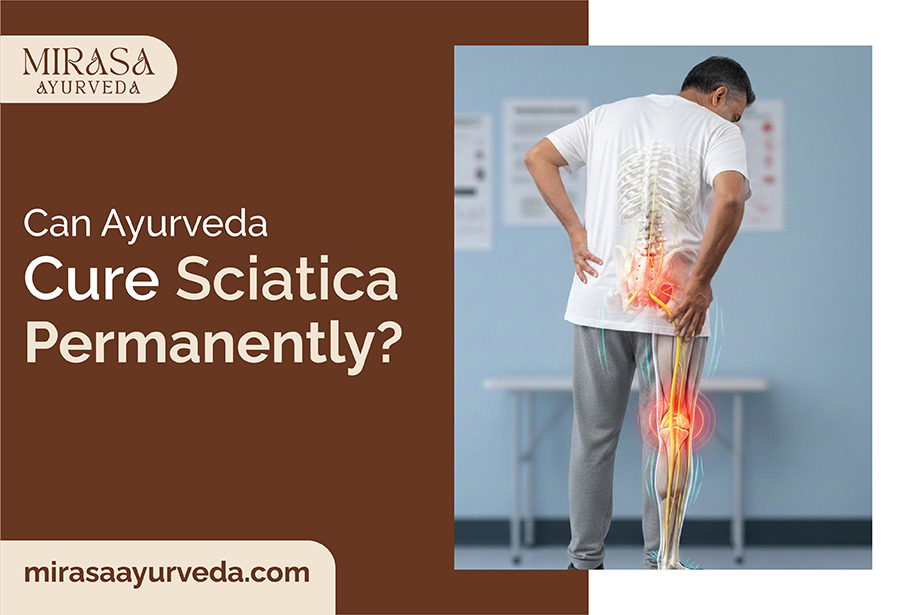
Sciatica is one of the most painful nerve conditions affecting millions of people worldwide. The sharp, radiating pain from the lower back to the legs can disrupt daily life, walking, and even sleeping. Many patients are searching for long-term solutions beyond temporary painkillers. Sciatica cases in India are more prevalent in women.
Modern science is still seeking an effective solution for sciatica, raising an important question: Can Ayurveda permanently cure it? Ayurveda focuses on addressing the root causes of muscle inflammation and nerve compression, and on restoring balance, offering a holistic and sustainable approach to healing. This blog explains the most effective Ayurvedic treatment for sciatica, its causes & symptoms.
Sciatica is a condition in which pain starts in the lower back and travels down the back of the leg. Sciatica can happen when a bulging disc in the lower spine pinches, presses on or irritates your sciatic nerve or its nerve root. It can also happen when conditions affect the group of nerves in your lower back that form the sciatic nerve.
Conditions that can cause sciatic nerve pain degenerative disk disease, foraminal stenosis Herniated disks , osteoarthritis, pregnancy & spinal stenosis. The pain can range from mild to very severe. Along with pain, a person may also feel:
Sciatica usually affects only one side of the body, but can affect both legs at the same time
Sciatica results from compression of the sciatic nerve, which runs from the buttocks to the legs, according to modern science, whereas in Ayurveda, this condition closely resembles Gridhrasi, a disorder mainly caused by aggravated Vata dosha.Sciatica is classified as a Vataja Nanatmaja Vyadhi affecting the sciatic nerve. Vata governs movement and nerve function.
Ayurvedic treatment for sciatica focuses on balancing Vata dosha, reducing nerve inflammation, and strengthening nerve tissues using Panchakarma therapies, herbal medicines, medicated oils, diet correction, and lifestyle changes. Apart from this, wrong sitting posture, sitting for long hours, back injuries, slipped disc, age-related spine problems, and weak or tight muscles can make the pain worse.
At Mirasa Ayurveda, sciatica is diagnosed by carefully assessing the patient’s condition, performing Nadi parikshan to assess doshic imbalances, asking detailed questions about the patient’s medical history, examining the body, and checking the pulse to identify the underlying internal imbalance.
Being overweight puts extra pressure on your lower back and spine. This added weight can compress or irritate the sciatic nerve, causing pain that travels from the lower back to the leg. Excess belly fat also affects posture, increasing strain on spinal discs.
Ayurveda considers these causes as factors that aggravate Vata and weaken nerve tissues.
Sciatica symptoms may vary from mild discomfort to severe nerve pain. Common symptoms include:
If untreated, symptoms can worsen over time and affect mobility.
Ayurveda focuses on treating the root cause of sciatica, not just the pain. The results depend on how severe the condition is, how long you have had it, and what is causing the nerve problem. Instead of providing only temporary relief, Ayurveda aims to correct the internal imbalance in the body.
The main goals of Ayurvedic treatment are to:
If sciatica is treated early and combined with a proper diet, lifestyle changes, and Ayurvedic therapies, it can provide long-term relief. In many cases, Ayurveda can help manage sciatica effectively and reduce dependence on painkillers.
Ayurveda uses a combination of therapies, herbal medicines, and lifestyle modifications to effectively treat sciatica.
Panchakarma is the most effective Ayurvedic detox and rejuvenation therapy for sciatica.
Kati Basti
Warm medicated oil is retained on the lower back to reduce nerve inflammation and pain.
Basti (Medicated Enema)
Considered the best treatment for Vata disorders, Basti nourishes nerves and removes toxins.
Abhyanga (Therapeutic Oil Massage)
Improves blood circulation, relaxes muscles, and strengthens nerves.
Swedana (Herbal Steam Therapy)
Reduces stiffness, improves flexibility, and relieves pain.
SSPS (Shashtika Shali Pinda Sweda)
Helps to reduce inflammation in the surrounding muscles and plays a vital role in strengthening the nerves. It is a powerful nerve-strengthening therapy.
Ayurvedic herbs help repair nerve damage and reduce inflammation naturally.
Common herbs include:
These herbs work internally to support lasting recovery. An Ayurvedic physician will suggest Ayurvedic combination medications proven to significantly reduce symptoms.
Medicated oils play a major role in sciatica pain treatment.
Common oils include:
These oils nourish nerve tissues and reduce pain naturally.
In Ayurveda, diet plays a very important role in managing sciatica. Eating the right foods helps balance Vata dosha and supports proper nerve healing. It is recommended to consume warm, freshly cooked meals, a moderate amount of ghee, milk, herbal drinks, soaked almonds, and well-cooked vegetables, as these foods are easy to digest and nourishing for the nerves. At the same time, dry, cold, stale, and processed foods should be avoided. Excess tea or coffee, junk food, oily fast food, and skipping meals can worsen the condition. Following a proper and balanced diet can help speed up recovery and reduce the chances of sciatica pain coming back.
Lifestyle correction is essential for permanent relief.
Recommended practices:
Adequate rest and sleep
Yoga improves flexibility and reduces nerve compression.
Ayurveda offers several advantages compared to conventional treatments:
Most importantly, it provides sustainable and long-term healing.
The time needed for recovery depends on several factors, such as the severity of the condition, how long you have had the symptoms, your age, overall health, and your daily lifestyle habits. Mild cases of sciatica may start improving within a few weeks, while The long-standing or chronic cases may take 2 to 3 months of regular, consistent Ayurvedic treatment to show significant results.
Evidence from Studies
Clinical studies support efficacy: One trial showed marked improvement (75-100% relief) in pain, stiffness, and SLR test with Basti and Kati Basti. Another confirmed Nirgundi therapies reduce symptoms significantly, minimizing recurrence. Results are better for cases under 1-year duration.
Sciatica can greatly affect your daily life and make simple activities difficult. However, Ayurveda offers a natural and complete approach to managing this condition. By balancing Vata dosha, strengthening and nourishing the nerves, and treating the root cause, Ayurvedic therapies help provide long-lasting relief from sciatic pain. For people wondering whether Ayurveda can permanently cure sciatica, the key is early treatment, proper care, and following the right diet and lifestyle. Ayurveda not only helps reduce pain but also strengthens the body and naturally helps prevent the problem from coming back.