
In recent years, many parents are actively searching for Ayurvedic treatment for Cerebral Palsy; this is largely because conventional treatments often focus on symptom management, while Ayurveda aims to improve quality of life by addressing the root imbalances in the body. Cerebral Palsy (CP) is a non-progressive neurological condition that primarily affects movement, muscle tone, posture, and coordination, usually appearing in early childhood.
Ayurveda offers a supportive and individualized approach for Cerebral Palsy by analyzing the child’s prakriti (constitution), dosha imbalance, and neurological strength, followed by medicines, therapies, diet, and lifestyle guidance. The goal is not to “cure” Cerebral Palsy, but to enhance motor function, improve muscle control, support brain–nerve communication, and promote overall development.
Cerebral Palsy is a neurological condition caused by damage to the developing brain, most commonly occurring before, during, or shortly after birth. This damage affects how the brain controls movement and posture. CP is not contagious and does not worsen over time, but its effects can change as the child grows.
Common challenges seen in Cerebral Palsy include:
Early intervention plays a crucial role in improving functional abilities and independence.
From an Ayurvedic standpoint, Cerebral Palsy is understood primarily as a Vata Vyadhi (disorder caused by an imbalance of the Vata dosha). Vata governs movement, nerve impulses, muscle coordination, and brain function. When Vata becomes aggravated — especially during pregnancy, childbirth, or early infancy—it can affect the Majja Dhatu (nervous tissue) and Mamsa Dhatu (muscle tissue).
Ayurveda also considers:
The Ayurvedic approach focuses on calming aggravated Vata, nourishing the nervous system, strengthening muscles, and improving neuromuscular coordination.
Cerebral palsy can result from several factors affecting the developing brain, such as:
Ayurveda correlates these causes with Vata disturbance, tissue undernourishment, and impaired neurological development.
Symptoms vary from child to child depending on the severity and area of brain involvement. Common symptoms include:
Early recognition of these symptoms allows timely therapeutic intervention, which can greatly improve mobility, development, and quality of life.
Based on movement patterns, Cerebral Palsy is classified into:
Cerebral palsy is classified based on movement patterns and muscle involvement. Each type affects the child differently and requires an individualised care approach.
The most common type is marked by stiff and tight muscles that restrict smooth movement. Children may find it difficult to walk, bend their limbs, or maintain proper posture.
Characterised by involuntary and uncontrollable movements. Muscle tone may fluctuate, making it hard for the child to control posture, facial expressions, or hand movements.
It mainly affects balance and coordination. Children may appear unsteady when walking and struggle with precise or fine-motor activities.
Involves a combination of symptoms from different types, depending on which areas of the brain are affected.
Ayurvedic treatment is customised according to the type, severity, and the child’s overall constitution.
Many families turn to Ayurveda because it offers:
Unlike symptomatic treatments alone, Ayurveda works on improving functional capacity and quality of life.
Ayurvedic treatment for Cerebral Palsy is individualised and long-term. It focuses on calming Vata, strengthening the nervous system, and supporting motor development.
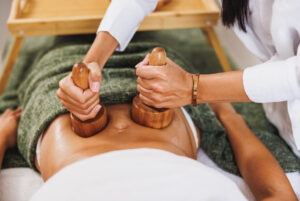
Specialised therapies are used based on the child’s condition:
These therapies help improve flexibility, coordination, and comfort.
Ayurvedic medicines support nerve nourishment, muscle strength, and brain development. They are carefully prescribed according to age, weight, and condition.
A Vata-pacifying, nourishing diet is advised to support tissue growth and digestion. Proper nutrition plays a vital role in neurological development.
Gentle physiotherapy, yoga-based movements, and routine discipline are integrated with Ayurvedic care for better outcomes.
What is Shashtika Shali Pinda Sweda (SSPS) therapy for Cerebral Palsy?
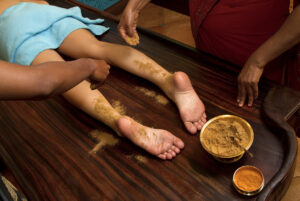
Shashtika Shali Pinda Sweda (SSPS) Procedure : Shashtika Shali Pinda Sweda (SSPS), also known as Navarakizhi, is a classical Ayurvedic Swedana (fomentation) therapy. In this procedure, warm boluses prepared from a special variety of rice and milk are applied over the body to provide controlled heat and nourishment to the tissues. The therapy is traditionally used for conditions involving weakness, stiffness, pain, and degeneration.
Meaning and Principle
Shashtika – a special type of rice harvested in about 60 days
Shali – rice
Pinda – bolus or pouch
Sweda – sweating or fomentation
Together, Shashtika Shali Pinda Sweda refers to fomentation therapy performed using rice boluses to induce gentle sweating and tissue relaxation.
Therapeutic Concept: In Shashtika Shali Pinda Sweda (SSPS), a special type of rice is cooked with herbal medicines and milk. This warm mixture is tied into small cloth bundles and gently pressed over the body. The warmth of these bundles helps the body to sweat, which improves blood flow and relaxes stiff muscles and joints. As the heat opens the body’s natural pathways, toxins and waste products trapped inside begin to loosen and move out.
What Is the Best Treatment for Cerebral Palsy in India?
An ideal treatment approach would:
This is why Ayurveda is the treatment of choice for some parents in India to support the treatment of Cerebral Palsy, especially in early intervention.
Why Does Early Treatment Matter?
Early Ayurvedic treatment can:
The sooner the therapy starts, the easier and the larger the child’s adaptation and progress will be.
Conclusion
Cerebral Palsy is an ongoing challenge; nevertheless, with proper supportive care, the child can achieve better mobility, comfort, and independence. Ayurvedic treatment for CP focuses on nourishing the nervous system, balancing Vata dosha, strengthening muscles, and improving overall health. Through individual therapy, herbal support, proper diet, and early intervention, Ayurveda offers a gentle yet effective approach to enhancing the quality of life for children with CP and supporting them in reaching their full potential.
Posted onTrustindex verifies that the original source of the review is Google. Very nice experience & very hard work ThanksPosted onTrustindex verifies that the original source of the review is Google. I have been visiting this centre for the past couple of months and am extremely happy with the way it functions and the treatments I have received. They offer an impressive range of Ayurveda therapies, addressing both bodywork and internal ailments with great care and expertise. The centre is immaculately clean, and the staff is highly efficient, professional, and attentive, making every visit comfortable and reassuring. I would wholeheartedly recommend this place to anyone seeking a natural, holistic approach to healing and overall well-being.Posted onTrustindex verifies that the original source of the review is Google. Therapists are well trained and experienced here and their behaviour is very good. I got therapies for a week from two of them and found them professionally efficient. I got my problems subsided. All staff are well behaved and reply to all queries immediately smilingly. I'll recommend this centre to all those who have problems in eyes and legs.Posted onTrustindex verifies that the original source of the review is Google. Very nice treatment. I am feeling relaxed after treatment. The staff and doctors are very nice.Posted onTrustindex verifies that the original source of the review is Google. Best ayurvedic panchkarma clinic in delhi.great experience doctors and good staff.Posted onTrustindex verifies that the original source of the review is Google. Best Panchkarma Center in Delhi. Had a good experience @mirasaayurvedaPosted onTrustindex verifies that the original source of the review is Google. I was struggling with neck pain and stiffness for a long time. Sitting at work all day just made it worse. I consulted an Ayurvedic doctor at Mirasa Ayurveda . Thanks to the expert care, it eased my neck pain and stiffness, leaving me relaxed, comfortable, and pain-free.Posted onTrustindex verifies that the original source of the review is Google. Did an Abhyanga massage on 26/7. The whole experience was fantastic starting with the elegance of the place, the oils they use, well experienced masseurs, the cleanliness of the place and the well caring staff across Mirasa. Coming back soon for sure.Posted onTrustindex verifies that the original source of the review is Google. Had a really good experience at Mirasa Ayurveda. The therapy was relaxing, the staff was caring, and I left feeling refreshed and lighter. Will definitely come back for another session.Load more
At Mirasa Ayurveda, we don’t just treat conditions—we restore balance and well-being. From pain relief to stress management, our patients have experienced life-changing results through natural Ayurvedic care.
"I had been dealing with sleepless nights and constant anxiety. After just a few Shirodhara sessions at Mirasa Ayurveda, my mind feels calmer and I finally sleep peacefully again."

“The pain in my joints used to slow me down every day. Potli massage therapy at Mirasa Ayurveda brought back my mobility and comfort—it’s like warmth and healing in one.”
“My lower back pain was unbearable, especially after long work hours. Kativasti gave me instant relief and long-term comfort. Highly recommend it!”

Since Cerebral Palsy is a non-progressive neurological condition, Ayurveda does not claim a complete cure for it. Yet, Ayurvedic treatment aims to improve motor function, muscle control, coordination, and quality of life through regimens that support the nervous system and balance Vata dosha.
Absolutely. Ayurvedic treatment is mild, natural, and non-invasive if done by a qualified Ayurvedic doctor. Medications and therapies are tailored to the child’s age, strength, and condition, making them safe for long-term supportive care.
Ayurvedic treatment can be started from the baby's birth. The earlier the intervention, the better, as it helps the child in motor development, preventing secondary complications, and the child becomes more adaptive as he/she grows.
Management of Cerebral Palsy is a long-term process which involves continuous care. Gradual improvements in comfort, flexibility, and muscle tone may be noticed, but further progress depends on continued treatment and regular follow-up.
Indeed, the Ayurvedic treatment is tailored according to the type of Cerebral Palsy (spastic, dyskinetic, ataxic, or mixed), the degree of symptoms, and the child’s prakriti. As a result, the treatment is both targeted and effective.
Yes. The best results come from combining Ayurveda with gentle, moderate physiotherapy, yoga movements, and supportive routines. This unified method stimulates mobility, coordination, and daily functioning.
Early treatment helps improve motor milestones, prevents complications such as muscle contractures, enhances speech and coordination, and supports better physical and cognitive development.