In today’s monotonous lifestyle, most jobs require long hours of sitting, leading to poor posture and a lack of movement, which have made spinal problems very common. One such condition is lumbar lordosis, where the natural curve of the lower spine gets disturbed. Many people seek lumbar lordosis treatment when pain, stiffness, and posture issues begin to affect daily life.
Just like other chronic conditions, Ayurveda focuses on treating the root cause, not just symptoms—an approach similar to how joint disorders are managed holistically by balancing doshas and removing toxins.
What Is Lordosis?
The human spine has a natural inward curve in the lower back, called lordosis. This curve helps in:
- Maintaining balance
- Absorbing shock
- Supporting body weight
In normal conditions, lumbar lordosis has a normal curvature angle that varies between 20 and 45 degrees, based on each person’s physical characteristics. This curvature allows the upper body’s weight to be supported correctly and transmits forces toward the lower limbs. When this curve becomes too flat or too curved, it leads to pain and posture problems.
Lumbar Lordosis is also known as
- Swayback or Hyperlordosis (when curve is excessive)
- Loss of lumbar curve or hypolordosis (when flattened)
Ayurvedic Perspective of Lumbar lordosis treatment
Ayurveda sees lumbar lordosis as a musculoskeletal issue mainly linked to Vata, which affects the lower back. This condition often comes with weakness, stiffness, postural strain, and sometimes tissue loss in the asthi or majja dhatus. Treatment usually focuses on calming Vata, easing pain and stiffness, and helping the spinal tissues strengthen, instead of trying to quickly straighten the curve. Ayurveda would look at lumbar lordosis through these lenses:
- Vata aggravation: dry, irregular, painful, mobile symptoms are often attributed to Vata imbalance.
- Dhatu involvement: chronic cases may involve asthi dhatu and majja dhatu depletion, which can weaken spinal support.
- Ama and Agni: If digestion/metabolism is weak, Ama may contribute to heaviness, inflammation, and poor tissue nourishment.
Who can get lumbar lordosis (extra curve in the lower back) ?
Doctors are still studying why some people get too much of a curve in their lower back. But according to Ayurveda (an old Indian system of health), people with a “vata” body type are more likely to get this problem. Vata people usually have thin bodies, dry skin, and a fast but sometimes irregular energy. This happens more when people grow older and their body’s digestive fire (called “agni”) becomes weaker.
Young sports players can get this too. Gymnasts and dancers who bend their backs again and again are at risk. Practising a lot in hot summer weather can make this worse, because heat and dryness both affect the body’s balance.
People who sit for a long time at a desk with bad posture can also develop this problem. Sitting too much makes the body sluggish, while poor posture makes muscles and joints dry and stiff.
The problem can also get worse during certain seasons, like late autumn and early spring, especially if people don’t take care of themselves properly during these times.
Ayurveda reminds us that every person is different. So, we shouldn’t assume everyone will have the same problem. But if your family has a history of swayback (too much curve in the lower back) or if you’re going through a life stage where your body type is more active, it’s a good idea to pay attention to your posture and daily habits.
Common Ayurvedic measures
Commonly suggested approaches include:
- Abhyanga: warm oil rub to reduce stiffness and nourish tissues.
- Kati Basti: localised medicated oil retention over the lower back.
- Swedana: gentle fomentation/steam to ease muscle tightness.
- Basti: considered a key therapy for Vata disorders in classical Ayurvedic practice.
- Yoga and pranayama: gentle back mobility work and calming breath practices, often used alongside treatment
Loss of Lumbar Lordosis Meaning
Loss of lumbar lordosis means the natural inward curve of the lower back is reduced or completely lost.
This can lead to:
- Flat-back appearance
- Difficulty standing straight
- Lower back pain
- Muscle tightness
Lordosis Causes
Understanding the causes helps in choosing the right lumbar lordosis treatment.
Common causes include:
- Poor posture (long sitting, slouching)
- Weak core muscles
- Obesity
- Injury or trauma
- Degenerative spine conditions
- Muscle imbalance
- Sedentary lifestyle
From an Ayurvedic perspective, this condition is mainly linked to:
- Vata imbalance (dryness, degeneration)
- Weak Asthi Dhatu (bone tissue)
- Accumulation of Ama (toxins) affecting joints and spine
Symptoms of Lumbar Lordosis
People with lordosis may notice one or more of the following symptoms:
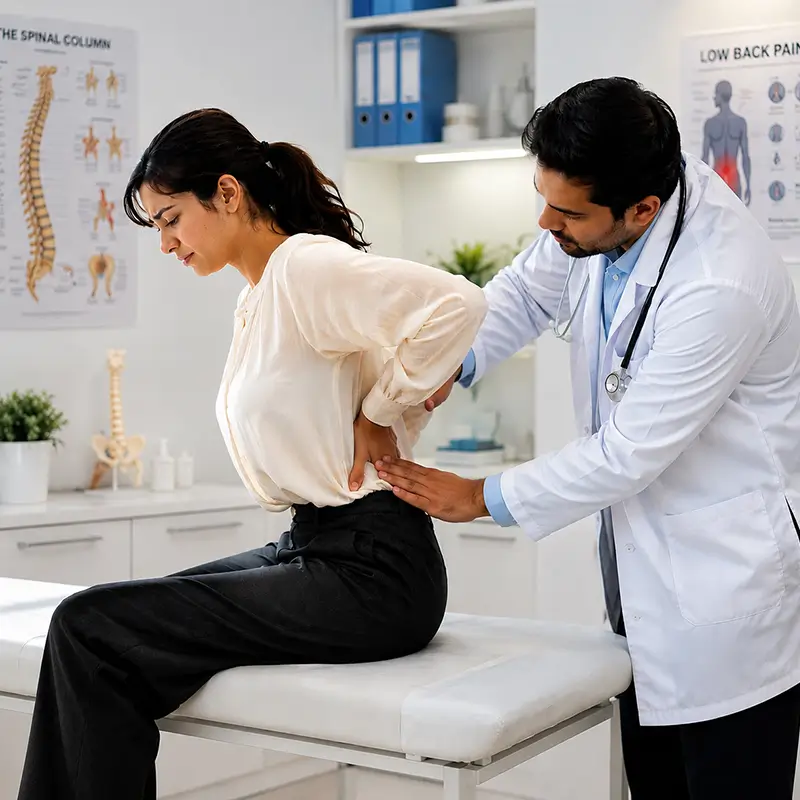
- Lower back pain: This is the most common symptom. The pain may get worse after sitting or standing for a long time.
- Tight muscles: You may feel stiffness or tightness in your lower back or around your hips.
- Difficulty standing straight: Some people find it hard to keep their back in a normal upright position.
- Feeling tired: Ongoing back pain and muscle strain can make everyday activities feel exhausting.
Signs It’s Time to See a Doctor
Get medical help as soon as possible if you experience:
- Severe or sudden back pain, especially if it doesn’t improve or is accompanied by fever or unexplained weight loss.
- Numbness or tingling in your legs or feet, as this may mean a nerve is being affected.
- Loss of bladder or bowel control, which is a medical emergency and needs immediate treatment.
Treatment approach of lumbar lordosis
Treatment depends on severity, but the goal is to:
- Restore natural spinal curve
- Reduce pain
- Strengthen muscles
- Improve posture
Ayurvedic Treatment for Lumbar Lordosis
Ayurveda offers a holistic and long-term solution by correcting internal imbalance.
1. Panchakarma Therapy (Detoxification)
Helps remove toxins and improve spinal health:
- Basti (medicated enema) – best for Vata disorders
- Kati Basti – warm oil therapy for lower back
- Abhyanga – improves blood circulation
- Swedana (steam therapy) – relieves stiffness
2. Herbal Medicines
Natural herbs help strengthen bones and reduce pain:
- Ashwagandha – improves muscle strength
- Guggulu – reduces inflammation
- Dashmool – supports nerve health
- Shallaki – helps joint mobility
3. Diet Correction
A proper Ayurvedic diet helps reduce degeneration:
- Warm, easily digestible food
- Use of ghee in small amounts
- Avoid cold, dry, and processed food
4. Lifestyle Changes
- Maintain correct posture
- Avoid long sitting hours
- Practise daily stretching
- Maintain healthy weight
How to Fix Lumbar Lordosis Naturally
Here are simple steps that help:
- Practice yoga (Bhujangasana, Setu Bandhasana)
- Strengthen core muscles
- Avoid slouching
- Use ergonomic chairs
- Take frequent breaks from sitting
Combining these with Ayurveda gives better and long-lasting results.
Loss of Lumbar Lordosis Treatment (Ayurvedic View)
Ayurveda focuses on:
- Balancing Vata dosha
- Nourishing bones (Asthi Dhatu)
- Removing Ama (toxins)
- Strengthening muscles and ligaments
This approach not only reduces pain but also restores spinal health naturally.
Conclusion
Lumbar lordosis may seem like a simple posture problem, but if ignored, it can lead to chronic back pain and mobility issues. The best lumbar lordosis treatment is one that treats the root cause.
Ayurveda provides a safe, natural, and effective solution through therapies, herbs, diet, and lifestyle correction—helping you regain a healthy spine and pain-free life.